The oil and gas industry generates enormous volumes of operational data across exploration, drilling, production, processing, refining, pipelines, LNG facilities, and terminals. Yet the challenge is increasingly not the availability of data, but the ability to understand how different datasets relate to one another and what that information means within an operational context.
Semantic data models are emerging as an important approach to solving this problem. Instead of treating operational data as isolated values stored across different applications, semantic models establish relationships between assets, processes, equipment, events, measurements, people, and business functions. This creates a contextual layer that allows data from different systems to be interpreted consistently.
For oil and gas companies pursuing advanced analytics, artificial intelligence, digital twins, and integrated operations, creating this contextual foundation can be critical to turning fragmented operational information into usable intelligence.
Why Context Matters in Oil & Gas Data
A typical oil and gas operation may have data distributed across multiple systems, including:
-
SCADA platforms
-
Distributed Control Systems
-
Historians
-
Enterprise Asset Management systems
-
Maintenance applications
-
Production databases
-
Engineering systems
-
Laboratory systems
-
ERP platforms
A temperature reading, for example, has limited value by itself. Its significance depends on which equipment produced the measurement, where that equipment is located, which process it belongs to, what operating conditions existed at the time, and how that measurement relates to other variables.
Semantic data models provide a way to represent these relationships.
Instead of simply asking “What is this data?”, organizations can begin answering “What does this data mean, what is it connected to, and why does it matter?”
From Data Integration to Data Contextualization
Traditional data integration focuses primarily on moving information between systems.
Semantic data modeling takes the process further by adding meaning and relationships to that information.
For example, a semantic model could establish relationships between:
Production Facility → Compressor → Component → Sensor → Measurement → Operating Condition → Maintenance Event
This creates a connected representation of an operational environment.
As a result, users and applications can analyze information based on relationships rather than relying solely on individual databases or predefined reports.
Connecting Data Across the Oil & Gas Value Chain
Semantic models can provide value across multiple areas of the oil and gas industry.
Upstream
Data from wells, reservoirs, drilling systems, production equipment, and field operations can be connected to create a more comprehensive representation of asset performance.
Midstream
Pipeline assets, pumping stations, compressors, inspection records, flow measurements, and maintenance information can be related within a common data context.
Downstream
Refineries and processing facilities can connect equipment, process units, sensors, maintenance activities, production outputs, and operating conditions.
LNG
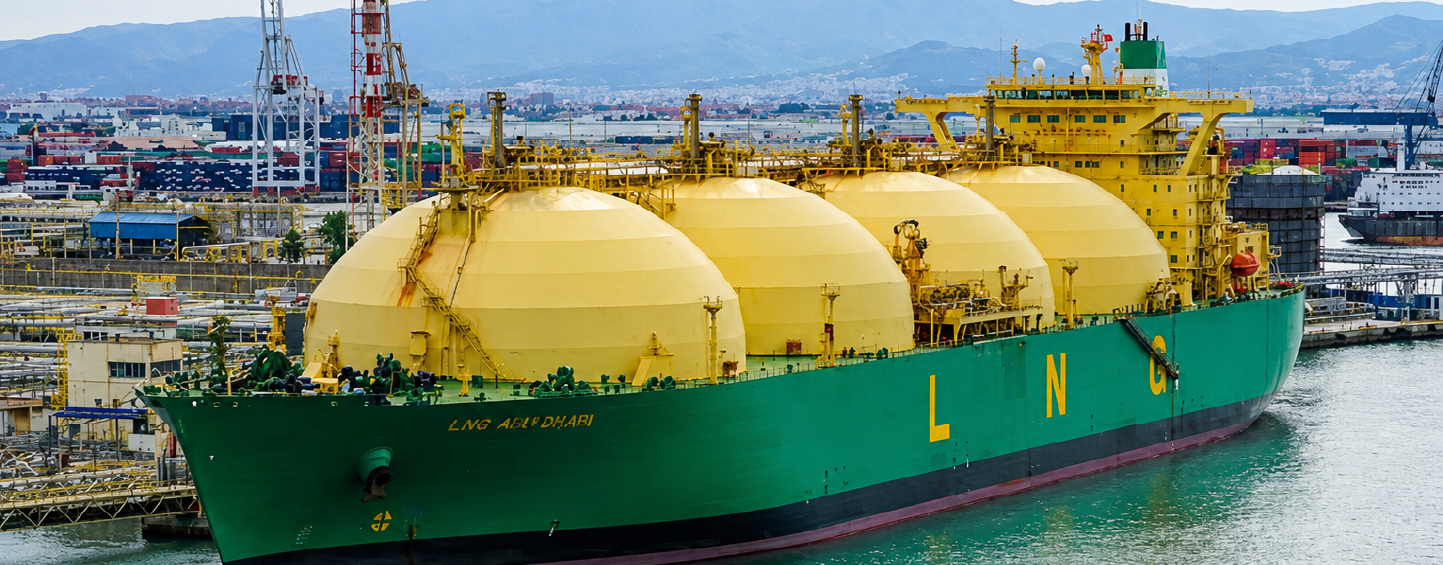
LNG facilities can establish relationships between liquefaction equipment, storage tanks, pumps, compressors, loading systems, and operational measurements.
This cross-functional connectivity can improve visibility across complex asset environments.
Semantic Models and Knowledge Graphs
Semantic data models are closely related to knowledge graphs, which represent entities and the relationships between them.
In an oil and gas environment, a knowledge graph could connect:
-
Wells
-
Reservoirs
-
Equipment
-
Processes
-
Sensors
-
Maintenance activities
-
Operators
-
Production events
-
Locations
This enables users to navigate operational information through relationships.
For example, instead of searching separately for equipment records, maintenance history, and production data, an engineer could query the relationships surrounding a specific compressor or production unit.
This can significantly improve information discovery and operational analysis.
Improving Industrial AI
Artificial intelligence is only as effective as the data and context available to it.
Large volumes of poorly contextualized industrial data can make it difficult for AI systems to distinguish between relevant and irrelevant information.
Semantic models can provide AI applications with greater context by connecting data points to the assets, processes, and operational conditions they represent.
This can support applications such as:
-
Predictive maintenance
-
Production optimization
-
Anomaly detection
-
Root-cause analysis
-
Intelligent search
-
Automated reporting
-
Operational decision support
For example, an AI model detecting abnormal compressor behavior can become more useful when it also understands the compressor's location, process role, connected equipment, maintenance history, and operating conditions.
Supporting Digital Twins
Digital twins depend on accurate relationships between physical assets, processes, data sources, and operational events.
Semantic data models can provide an underlying contextual structure for digital twin environments.
A digital twin could therefore connect:
Physical Asset → Digital Representation → Sensor Data → Process Model → Historical Events → Operational Analytics
This allows digital twins to become more than visual representations of physical assets. They can become connected operational models capable of supporting analysis and decision-making.
Breaking Down Data Silos
Data silos remain a major challenge for large oil and gas organizations.
Different business units may use different naming conventions, data structures, applications, and standards. The same piece of equipment may even be identified differently across engineering, maintenance, production, and enterprise systems.
Semantic modeling can help create a common layer of meaning across these environments.
This can improve:
-
Data interoperability
-
Asset identification
-
Information discovery
-
Cross-system analytics
-
Data reuse
-
Enterprise data governance
Rather than forcing every underlying system to use exactly the same structure, organizations can establish relationships between different data sources through a shared semantic layer.
Enabling More Intelligent Data Queries
One of the practical benefits of contextualized data is improved information retrieval.
Traditional queries often require users to know exactly where information is stored and how the database is structured.
A semantic approach allows applications to work with concepts and relationships.
An engineer could potentially ask:
Which compressors connected to this production train have experienced abnormal vibration during the last six months?
The system can then use the relationships between assets, sensors, production units, measurements, and historical events to identify the relevant information.
This is particularly valuable as organizations introduce natural-language interfaces and AI assistants into industrial environments.
Data Governance and Standardization
Semantic modeling also has an important role in industrial data governance.
Creating common definitions for assets, processes, measurements, events, and relationships can improve consistency across the organization.
Important considerations include:
-
Common asset definitions
-
Standardized terminology
-
Data lineage
-
Metadata management
-
Data ownership
-
Data quality
-
Version management
-
Access controls
Without strong governance, semantic models can become inconsistent or difficult to maintain.
The objective should therefore be to create a reusable and governed contextual layer rather than another isolated data repository.
Challenges in Implementing Semantic Data Models
Implementing semantic data models across large oil and gas organizations can be complex.
Legacy Systems
Older applications may use proprietary structures and inconsistent naming conventions.
Data Quality
Poor-quality or incomplete data can reduce the reliability of semantic relationships.
Standardization
Different departments may have different definitions for the same asset or process.
Scale
Large organizations can have millions of data points and thousands of assets that need to be contextualized.
Workforce Expertise
Successful implementation requires knowledge across industrial operations, data engineering, information architecture, and domain-specific processes.
A phased approach focusing on high-value use cases can help organizations demonstrate value before expanding semantic models across the wider enterprise.
The Future of Contextualized Industrial Data
The future of industrial data management is increasingly moving beyond simply collecting and storing information.
Oil and gas companies will need to create data environments where information is connected, contextualized, discoverable, and reusable.
Semantic data models can provide an important foundation for this transition.
As AI, digital twins, advanced analytics, and industrial data platforms become more widespread, the ability to understand relationships between assets, processes, measurements, and events will become increasingly important.
The organizations that successfully build this contextual layer will be better positioned to extract value from their existing operational data without constantly creating new data silos.
Turning Industrial Data Into Operational Intelligence
Semantic data models represent an important evolution in how oil and gas companies approach industrial data.
Instead of treating operational information as disconnected datasets, semantic modeling creates relationships that explain how different pieces of information fit together.
This contextual intelligence can support more effective analytics, AI, digital twins, asset management, and operational decision-making.
For oil and gas organizations managing increasingly complex digital environments, the ability to connect data with meaning and relationships could become one of the most important foundations for the next generation of intelligent operations.
Explore Data-Driven Transformation in Oil & Gas
The Data Driven Oil & Gas Conference by PTN Events brings together data leaders, digital executives, AI specialists, technology providers, engineers, and oil and gas professionals to explore how data and advanced technologies are transforming exploration, production, processing, and operational decision-making.
Key areas include industrial data platforms, semantic data, AI, machine learning, data governance, digital twins, predictive analytics, data integration, operational intelligence, and advanced oil and gas analytics.
Register for the conference:
https://ptnevents.com/conferences/datadriven-oil-and-gas/register