Industrial decarbonization is becoming one of the defining priorities for energy, manufacturing, refining, petrochemical, steel, cement, and chemical industries across North America. As organizations invest in Carbon Capture, Utilization, and Storage (CCUS) projects, the focus is shifting beyond capturing carbon emissions toward building connected infrastructure that can monitor, transport, store, and optimize carbon across an entire industrial ecosystem.
This is where digital infrastructure for industrial carbon management is becoming essential. Modern carbon management networks integrate carbon capture facilities, CO₂ pipelines, compression stations, storage reservoirs, industrial monitoring systems, AI-powered analytics, Industrial Internet of Things (IIoT), digital twins, and centralized operations platforms into one connected operational environment.
Rather than managing individual carbon assets independently, digital infrastructure enables operators to monitor carbon flows in real time, optimize storage capacity, improve asset integrity, strengthen regulatory reporting, and create scalable carbon management ecosystems that support long-term industrial decarbonization.
As CCUS projects expand across North America, intelligent digital infrastructure is becoming the backbone of connected carbon management networks.
Why Digital Infrastructure Is Critical for Industrial Carbon Management
Carbon management involves multiple infrastructure assets operating across geographically distributed industrial facilities. Without connected digital systems, monitoring carbon capture performance, transportation networks, and storage operations becomes increasingly complex.
Digital carbon infrastructure helps organizations:
-
Monitor captured CO₂ in real time.
-
Improve carbon transport visibility.
-
Optimize storage operations.
-
Strengthen asset integrity.
-
Support emissions reporting.
-
Improve operational efficiency.
-
Enable scalable CCUS infrastructure.
Connected operational intelligence helps reduce operational risk while improving long-term infrastructure performance.
Building Connected Carbon Capture Infrastructure
Carbon capture facilities are becoming increasingly digital as industries deploy automation and analytics across emissions management systems.
Digital carbon capture infrastructure includes:
-
Carbon capture units.
-
CO₂ compressors.
-
Emissions monitoring systems.
-
Industrial sensors.
-
Process automation.
-
AI-powered monitoring platforms.
-
Edge computing devices.
-
Operations dashboards.
Continuous operational monitoring helps optimize capture efficiency while improving facility reliability.
Industrial IoT Creates Real-Time Carbon Visibility
Industrial IoT sensors provide continuous operational data throughout carbon capture, transport, and storage infrastructure.
Connected devices monitor:
-
CO₂ pressure.
-
Flow rates.
-
Temperature.
-
Pipeline conditions.
-
Compressor health.
-
Storage reservoir conditions.
-
Equipment vibration.
-
Environmental monitoring systems.
Real-time operational visibility allows operators to identify performance deviations before they impact infrastructure operations.
AI Improves Carbon Capture and Storage Operations
Artificial Intelligence is becoming an important capability for optimizing industrial carbon management infrastructure.
AI applications include:
-
Capture efficiency optimization.
-
CO₂ flow forecasting.
-
Pipeline anomaly detection.
-
Compressor performance optimization.
-
Predictive maintenance.
-
Storage capacity forecasting.
-
Operational risk analysis.
-
Carbon reporting automation.
AI enables operators to improve carbon infrastructure performance while reducing operational uncertainty.
Digital Twins Optimize Carbon Infrastructure Performance
Digital twins create virtual operational models of carbon capture facilities, transport networks, and storage assets.
Digital twins help operators:
-
Simulate carbon flows.
-
Monitor infrastructure health.
-
Optimize storage injection.
-
Evaluate operational scenarios.
-
Predict equipment degradation.
-
Improve maintenance planning.
-
Estimate infrastructure performance.
Virtual operational models support smarter engineering decisions across CCUS networks.
CO₂ Transport Networks Become Intelligent Infrastructure
CO₂ transportation is one of the most important components of industrial carbon management.
Digital infrastructure supports:
-
Pipeline monitoring.
-
Pressure management.
-
Leak detection.
-
Flow optimization.
-
Compressor coordination.
-
Network integrity monitoring.
-
Remote pipeline operations.
Connected CO₂ transport networks improve operational reliability while supporting regional carbon management hubs.
Monitoring Carbon Storage Assets in Real Time
Carbon storage sites require continuous monitoring to ensure long-term operational safety and storage integrity.
Digital monitoring includes:
-
Reservoir pressure.
-
Injection performance.
-
Seismic monitoring.
-
Well integrity.
-
Storage capacity.
-
Environmental sensors.
-
Ground movement monitoring.
Real-time monitoring helps operators verify storage performance while supporting regulatory compliance.
Centralized Carbon Operations Centers Improve Decision-Making
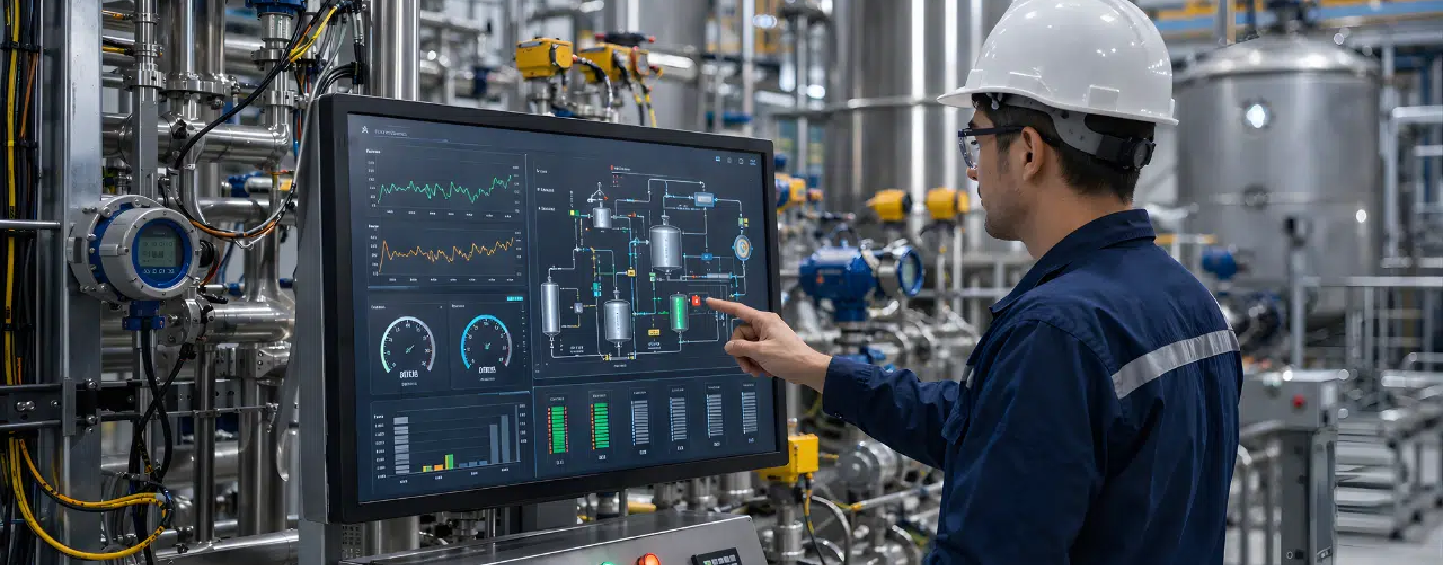
Industrial carbon management increasingly relies on centralized operations centers capable of monitoring multiple carbon assets across industrial regions.
Operations centers provide visibility into:
-
Carbon capture performance.
-
Pipeline operations.
-
Storage asset health.
-
Infrastructure KPIs.
-
Maintenance priorities.
-
Emissions reporting.
-
Operational risks.
Centralized visibility improves coordination between engineering, operations, maintenance, and compliance teams.
Predictive Maintenance Strengthens Carbon Infrastructure Reliability
CCUS infrastructure includes compressors, pumps, pipelines, valves, monitoring equipment, and storage wells that require continuous maintenance.
Predictive maintenance analyzes:
-
Equipment vibration.
-
Pressure fluctuations.
-
Flow anomalies.
-
Temperature behavior.
-
Historical maintenance records.
-
Operational trends.
Condition-based maintenance reduces downtime while improving infrastructure availability.
Integrating Carbon Management With Industrial Energy Clusters
Industrial energy clusters increasingly connect carbon capture infrastructure across multiple industrial facilities.
Integrated infrastructure supports:
-
Hydrogen production.
-
Refineries.
-
Petrochemical plants.
-
Steel manufacturing.
-
Cement facilities.
-
Chemical manufacturing.
-
Industrial logistics hubs.
Shared digital infrastructure improves carbon management across regional industrial ecosystems.
Carbon Accounting and Emissions Reporting Become Automated
Digital infrastructure simplifies carbon accounting by connecting operational emissions data with enterprise reporting systems.
Automated reporting supports:
-
Carbon capture verification.
-
Emissions tracking.
-
Compliance reporting.
-
ESG reporting.
-
Carbon inventory management.
-
Performance dashboards.
Automated reporting improves transparency while reducing manual reporting effort.
Cybersecurity Protects Connected Carbon Infrastructure
As carbon infrastructure becomes increasingly digital, Operational Technology cybersecurity becomes essential.
Key cybersecurity capabilities include:
-
Secure OT networks.
-
Network segmentation.
-
Identity and access management.
-
Continuous threat monitoring.
-
Secure remote connectivity.
-
Industrial cybersecurity governance.
Cyber resilience helps protect critical carbon management infrastructure across industrial facilities.
Challenges in Scaling Digital Carbon Infrastructure
Building connected carbon management infrastructure requires modernization across industrial operations.
Multi-Asset Integration
Carbon capture, transport, and storage systems must operate within one connected digital ecosystem.
Data Standardization
Operational data must remain consistent across infrastructure operators and industrial facilities.
Infrastructure Investment
Digital carbon management requires investment in sensors, connectivity, analytics, and monitoring platforms.
Regulatory Compliance
Operators must maintain accurate monitoring and reporting across multiple jurisdictions.
Workforce Development
Carbon management increasingly requires expertise in digital infrastructure, automation, AI, and CCUS operations.
Addressing these challenges helps organizations build scalable carbon management networks capable of supporting industrial decarbonization.
The Future of Digital Carbon Management Infrastructure
Industrial carbon infrastructure is evolving into intelligent operational ecosystems where AI, Industrial IoT, digital twins, edge computing, predictive analytics, and autonomous monitoring continuously optimize carbon capture and storage operations.
Future developments will likely include:
-
AI-powered carbon operations centers.
-
Autonomous pipeline monitoring.
-
Intelligent carbon storage optimization.
-
Industrial cloud carbon platforms.
-
Real-time carbon accounting.
-
Cross-industry carbon infrastructure networks.
-
Enterprise-wide carbon intelligence platforms.
These technologies will strengthen industrial carbon management while improving operational resilience and infrastructure efficiency.
Building Connected Infrastructure for Industrial Decarbonization
Digital infrastructure is transforming industrial carbon management from isolated carbon capture projects into connected regional infrastructure ecosystems. By integrating carbon capture facilities, CO₂ transport networks, storage assets, AI, Industrial IoT, digital twins, and predictive maintenance into one intelligent operational environment, organizations can improve emissions management while strengthening long-term infrastructure performance.
For industrial operators, infrastructure developers, technology providers, and energy companies, connected carbon infrastructure is becoming a critical foundation for scaling CCUS, improving operational visibility, and accelerating industrial decarbonization across North America.
As investment in carbon capture and storage continues to grow, digital infrastructure will play a central role in building smarter, safer, and more efficient carbon management networks.
Explore the Future of Industrial Decarbonization
The North America Transition Summit by PTN Events brings together CCUS developers, hydrogen producers, industrial manufacturers, infrastructure operators, EPC contractors, technology providers, policymakers, and energy leaders to discuss the infrastructure enabling industrial decarbonization across North America.
Key discussion areas include industrial carbon management, carbon capture infrastructure, CO₂ transport networks, carbon storage, AI-powered CCUS operations, Industrial IoT, digital twins, carbon accounting, and low-carbon industrial infrastructure.
Register for the conference:
https://ptnevents.com/conferences/north-american-transition/register