The scale of the opportunity is significant. At India Energy Week 2026, the government highlighted investment opportunities of up to $500 billion, supported by expanding refining capacity, domestic exploration and production, LNG infrastructure and related industrial development.
What makes the current cycle particularly important is the changing composition of investment. Projects are increasingly designed to create integrated infrastructure, greater domestic value addition and stronger connections between upstream resources and downstream markets.
Upstream Exploration Is Moving Higher on the Investment Agenda
India continues to rely heavily on imported crude, making domestic exploration and production a strategic investment priority.
A major development in 2026 was the approval of Samudra Manthan, the National Offshore Exploration Scheme, with an outlay of ₹84,084 crore through FY 2030–31. The programme is designed to accelerate offshore exploration, deploy advanced technologies, develop shared infrastructure and strengthen domestic capabilities across the offshore value chain.
The initiative could create opportunities across more than exploration alone.
Investment demand is likely to extend into:
- Offshore drilling and subsea services.
- Seismic and geological technologies.
- Offshore production infrastructure.
- Well services and intervention.
- Marine logistics.
- Digital field technologies.
- Asset integrity and inspection
This makes upstream one of the areas where technology-intensive capital deployment could increase significantly.
Petrochemicals Are Increasing the Value of Refining Investments
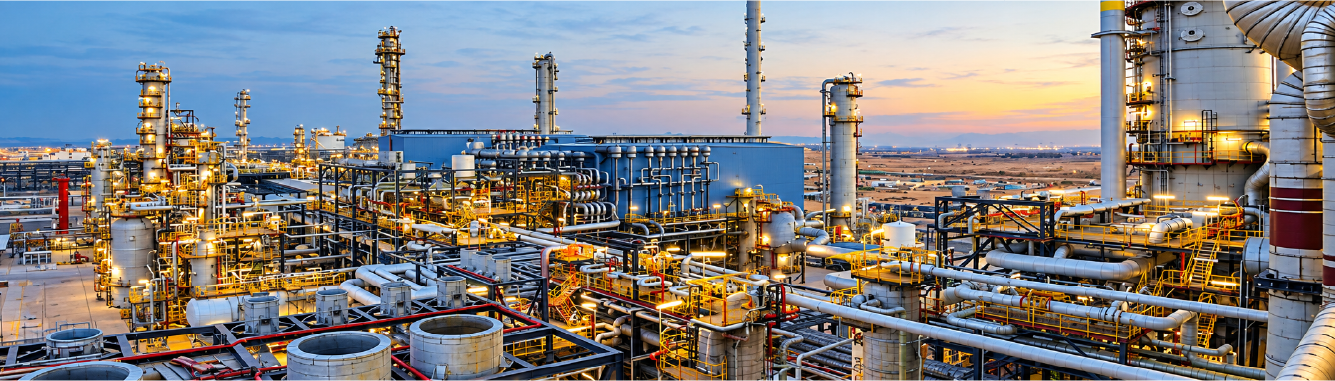
One of the clearest shifts in India's downstream investment strategy is the growing integration of refining and petrochemical production.
The ₹79,450-crore Rajasthan Refinery and Petrochemical Complex at Pachpadra, for example, combines a 9 MMTPA refinery with 2.4 MMTPA of petrochemical capacity.
The project illustrates the direction of India's downstream investment: rather than treating fuel production and petrochemicals as separate businesses, large projects are increasingly being designed around higher-value product integration.
This creates investment opportunities in:
This creates investment opportunities in:
- Polymer production.
- Chemical intermediates.
- Petrochemical feedstock processing.
- Storage and logistics.
- Plastic and manufacturing clusters.
- Specialty chemical production.
For investors, integrated refinery-petrochemical complexes can provide greater diversification across the downstream value chain.
Pipeline Investment Is Becoming More Strategic
Pipeline infrastructure increasingly determines how efficiently India's oil and gas resources can reach markets.
Investment is moving toward expanding and connecting:
- Natural gas pipelines.
- Product pipelines.
- Crude oil pipelines.
- Regional gas networks.
- Industrial distribution infrastructure.
A recent example is Indian Oil's planned ₹24.49 billion investment in the 424.65-km Kochi–Kanyakumari–Thoothukudi natural gas pipeline, designed with capacity of 6.84 MMSCMD.
Projects such as this demonstrate that pipeline investment is not simply about transportation. Better connectivity can expand market access, improve supply flexibility and enable industrial clusters to access reliable gas supplies.
Digital Infrastructure Is Becoming Part of the Investment Pipeline
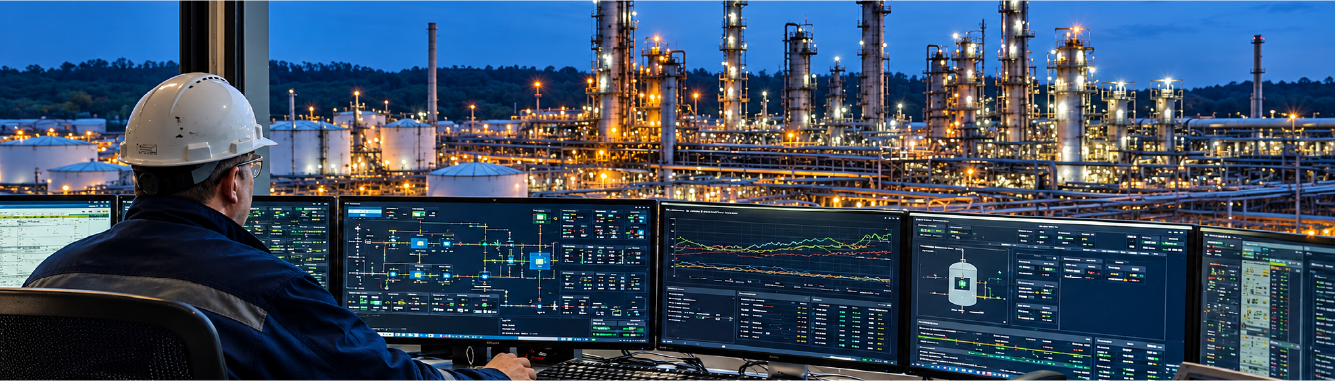
As physical oil & gas infrastructure expands, investment in digital infrastructure is becoming increasingly important.
New and modernized assets are incorporating:
- Industrial data platforms.
- Advanced process control.
- Digital twins.
- Predictive maintenance.
- Remote monitoring.
- AI-enabled analytics.
- Industrial cybersecurity.
- Automated operations.
The objective is increasingly to improve the economics of physical infrastructure through better utilization, reliability and decision-making.
For large capital-intensive assets, even incremental improvements in uptime, throughput and maintenance performance can have significant financial implications.
Strategic Storage and Supply Resilience Remain Important
India's dependence on imported crude also keeps strategic storage and supply resilience on the investment agenda.
The country has continued exploring opportunities around strategic petroleum reserves, including potential international participation and expanded storage infrastructure.
In May 2026, India and the UAE discussed potential collaboration involving crude storage in India's strategic petroleum reserves, including participation in facilities in Visakhapatnam and proposed reserve infrastructure in Odisha.
This highlights a broader trend: infrastructure investment is increasingly being viewed through the lens of supply security, flexibility and resilience, rather than capacity alone.
India's Oil & Gas Investment Story Is Becoming More Integrated
India's oil & gas investment pipeline is no longer defined by a single segment.
Capital is moving simultaneously into exploration, offshore development, refining, petrochemicals, LNG, pipelines, storage and downstream infrastructure, while digital technologies are increasingly being embedded across the value chain.
The strategic opportunity is therefore broader than expanding physical capacity. India is building a more connected hydrocarbon infrastructure ecosystem in which upstream resources, processing facilities, transportation networks and industrial consumers can operate as part of a more integrated system.
For investors and industry stakeholders, the key question is no longer simply where India is investing in oil and gas.
It is where these investments connect - and where those connections can create the next layer of industrial value.
Categories
Oil & Gas Investment