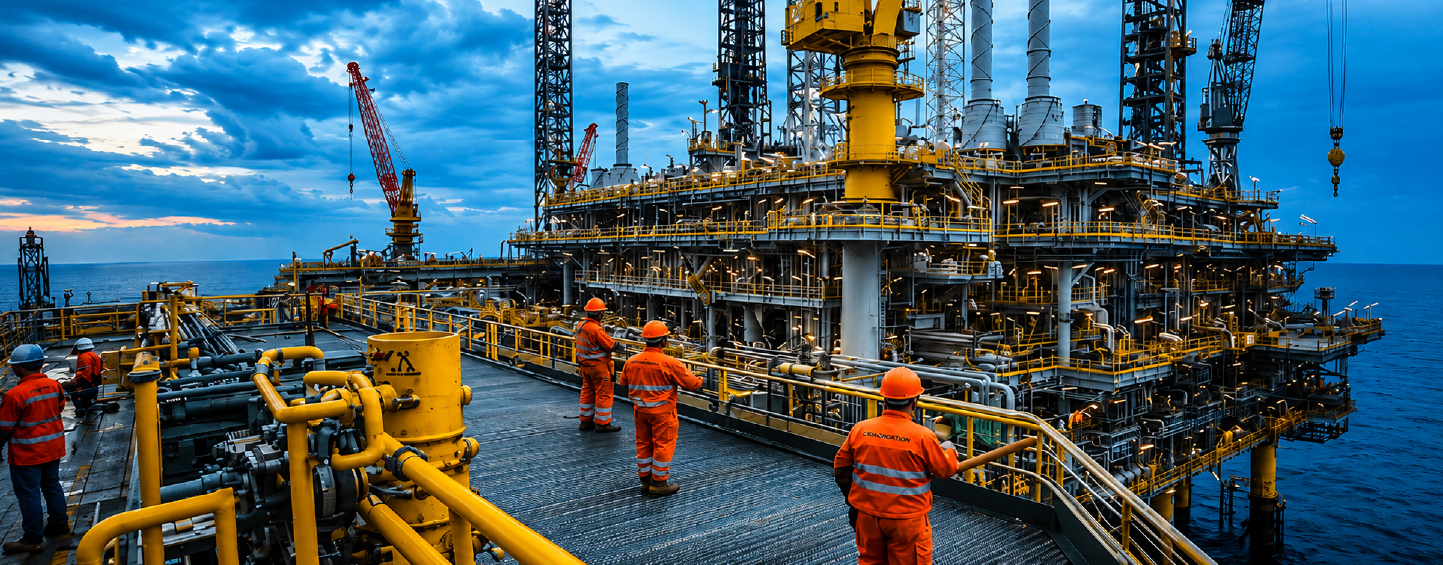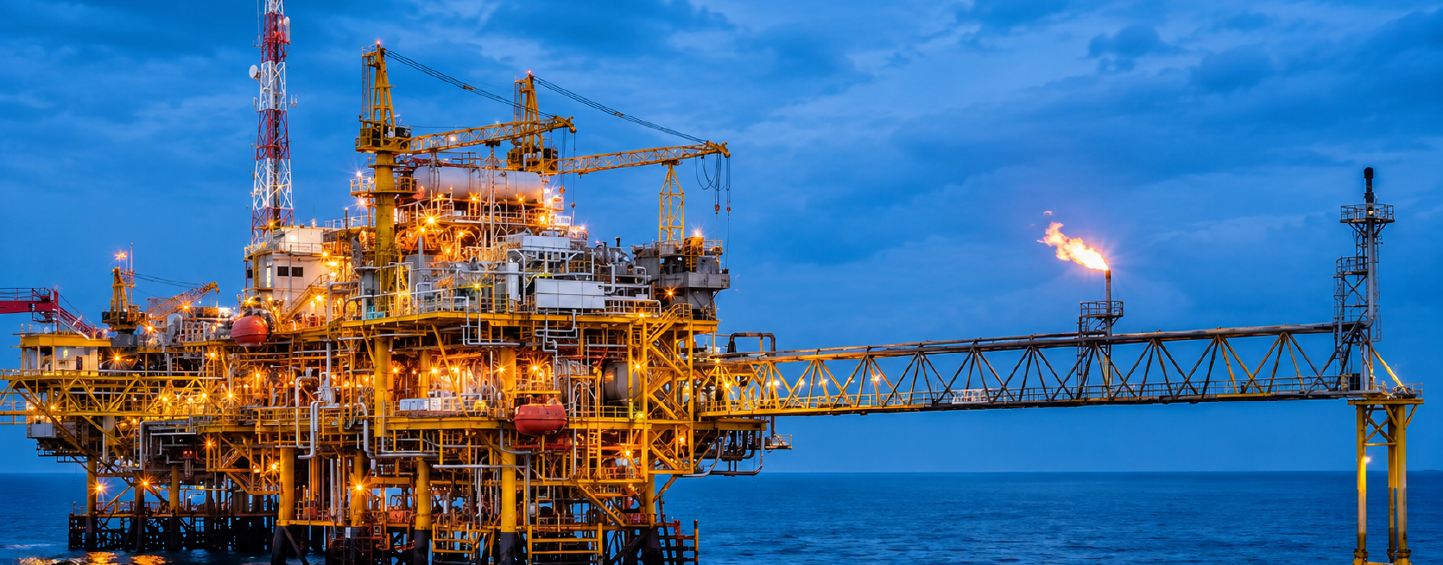
India's offshore gas sector is entering a new phase of development as the country intensifies efforts to increase domestic natural gas production and reduce dependence on imported energy. With growing industrial demand, expanding gas infrastructure, and long-term energy security priorities, offshore gas reserves in India's deepwater basins are becoming increasingly important to the future of the country's oil and gas industry.
From the Krishna-Godavari Basin and Mahanadi Basin to emerging offshore opportunities in the Andaman region, operators are investing in advanced drilling technologies, subsea production systems, digital reservoir management, and offshore infrastructure capable of developing technically challenging gas resources. These investments are creating new opportunities for exploration companies, EPC contractors, offshore service providers, technology companies, and infrastructure developers operating across India's upstream sector.
As deepwater exploration technologies continue to evolve, offshore gas development is expected to become one of the most significant contributors to India's next generation of upstream growth.
Why Offshore Gas Is Becoming a Strategic Priority for India
India's growing economy continues to increase demand for natural gas across power generation, fertilizers, refineries, petrochemicals, city gas distribution, manufacturing, and industrial applications. While LNG imports remain an important supply source, increasing domestic offshore production is becoming a strategic priority for improving long-term energy security.
Offshore gas development offers several long-term advantages:
-
Increased domestic natural gas production.
-
Reduced dependence on imported LNG.
-
Improved energy security.
-
Development of new offshore infrastructure.
-
Expansion of upstream investment opportunities.
-
Support for India's growing gas economy.
Deepwater gas resources are therefore becoming an increasingly valuable component of India's upstream exploration strategy.
India's Deepwater Basins Hold Significant Growth Potential
India possesses multiple offshore sedimentary basins with significant exploration potential across both the east and west coasts.
Major offshore exploration regions include:
-
Krishna-Godavari Basin.
-
Mahanadi Basin.
-
Cauvery Offshore Basin.
-
Mumbai Offshore Basin.
-
Andaman Offshore Basin.
These basins contain a combination of producing fields, undeveloped discoveries, and frontier exploration acreage that continues to attract investment from national and international operators.
As exploration expands into deeper waters, operators are focusing on technologies capable of managing high-pressure, high-temperature reservoirs and complex subsea production environments.
Deepwater Exploration Technologies Are Advancing Offshore Development
Modern offshore exploration depends on technologies that improve reservoir understanding while reducing drilling risks and improving project economics.
Key technologies supporting deepwater gas development include:
-
3D and 4D seismic imaging.
-
Advanced reservoir modelling.
-
Managed Pressure Drilling (MPD).
-
High-pressure drilling systems.
-
Real-time drilling analytics.
-
Directional and horizontal drilling.
-
Intelligent well completion technologies.
-
Digital well planning.
These technologies help operators identify promising reservoirs, optimise drilling performance, and improve exploration success rates in challenging offshore environments.
Subsea Production Systems Supporting Offshore Gas Projects
Subsea production systems are becoming essential for developing deepwater gas reserves located far from existing offshore platforms.
Modern subsea infrastructure includes:
-
Subsea trees.
-
Wellheads.
-
Manifolds.
-
Flowlines.
-
Umbilicals.
-
Risers.
-
Subsea control systems.
-
Subsea boosting technologies.
These systems allow operators to connect multiple offshore wells to centralized production facilities while improving recovery from deepwater gas fields and reducing the need for additional surface infrastructure.
Subsea tieback strategies are also enabling smaller offshore discoveries to be connected to existing production hubs, improving project economics and infrastructure utilization.
Digital Technologies Are Transforming Offshore Gas Operations
Digital transformation is reshaping offshore exploration, drilling, and production by providing operators with greater operational visibility and predictive decision-making capabilities.
Important digital technologies include:
-
Industrial Internet of Things (IIoT).
-
Artificial Intelligence (AI).
-
Digital twins.
-
Predictive maintenance.
-
Remote asset monitoring.
-
Cloud-based operational platforms.
-
Advanced production analytics.
-
Real-time drilling dashboards.
These technologies help operators optimise production, monitor equipment health, reduce downtime, and improve operational efficiency across offshore assets.
Building Offshore Infrastructure for Future Gas Production
Offshore gas development requires significant investment in infrastructure capable of supporting production over several decades.
Critical infrastructure includes:
-
Offshore production platforms.
-
Floating Production Storage and Offloading (FPSO) facilities.
-
Subsea production systems.
-
Gas gathering pipelines.
-
Offshore processing facilities.
-
Export pipelines.
-
Onshore receiving terminals.
-
Digital communication infrastructure.
Developing this infrastructure is essential for connecting offshore gas production with India's expanding transmission and distribution network.
Improving Offshore Safety and Operational Reliability
Safety remains one of the highest priorities in offshore gas development due to the complexity of deepwater operations and remote operating environments.
Modern offshore projects increasingly rely on:
-
Digital safety monitoring.
-
Blowout prevention technologies.
-
Well integrity monitoring.
-
Remote inspection systems.
-
Predictive equipment maintenance.
-
Integrity management platforms.
-
Autonomous inspection technologies.
-
Emergency response systems.
These technologies help operators strengthen operational reliability while reducing risks associated with offshore drilling and production activities.
Investment Opportunities Across India's Offshore Gas Value Chain
India's offshore gas expansion is creating investment opportunities across exploration, infrastructure, engineering, technology, and operations.
Key opportunity areas include:
-
Offshore exploration and appraisal.
-
Deepwater drilling services.
-
Subsea engineering.
-
Offshore construction.
-
Pipeline infrastructure.
-
Offshore logistics.
-
Asset integrity management.
-
Digital offshore technologies.
-
Inspection and maintenance services.
-
Offshore automation solutions.
As offshore developments become larger and more technologically advanced, collaboration between operators, technology providers, EPC companies, and offshore service companies will become increasingly important.
Challenges Facing India's Deepwater Gas Development
Despite significant opportunities, offshore gas projects remain among the most technically demanding developments in the oil and gas industry.
Major challenges include:
-
High exploration and development costs.
-
Complex geological conditions.
-
Deepwater installation requirements.
-
Long project development timelines.
-
Offshore asset integrity.
-
Skilled workforce availability.
-
Environmental and regulatory compliance.
-
Integration of subsea and topside infrastructure.
Successfully managing these challenges requires advanced engineering capabilities, digital technologies, and long-term investment strategies.
The Future of Offshore Gas Development in India
India's offshore gas sector is expected to become increasingly technology-driven over the coming decade. Operators are likely to expand exploration in frontier basins while investing in intelligent drilling technologies, subsea processing systems, autonomous inspection solutions, and AI-enabled production optimisation.
Future developments are expected to focus on:
-
Greater deepwater exploration activity.
-
Expansion of subsea production infrastructure.
-
Increased digitalization of offshore operations.
-
Enhanced reservoir recovery technologies.
-
More integrated offshore gas transportation infrastructure.
-
Smarter offshore asset management.
These advancements will help improve production efficiency while supporting India's long-term natural gas growth ambitions.
Unlocking India's Next Generation of Offshore Gas Opportunities
Offshore gas development is becoming one of the most important pillars of India's upstream oil and gas strategy. As exploration moves into deeper waters and operators adopt more advanced drilling, subsea, and digital technologies, offshore gas projects will play a larger role in strengthening domestic production and supporting the country's expanding natural gas economy.
For India's oil and gas industry, the next generation of offshore development will be defined not only by discovering new reserves but also by building resilient infrastructure, deploying intelligent technologies, and improving operational performance across deepwater assets.
Explore the Future of Oil & Gas in India
The Future of Oil & Gas in India Conference by PTN Events brings together upstream operators, offshore drilling companies, technology providers, EPC contractors, policymakers, infrastructure developers, and industry experts to discuss the opportunities shaping India's offshore oil and gas sector.
Key topics include deepwater exploration, offshore gas development, subsea production systems, offshore infrastructure, drilling technologies, digital transformation, asset integrity, natural gas growth, and upstream investment opportunities.
Register for the conference: https://ptnevents.com/conferences/future-oil/register