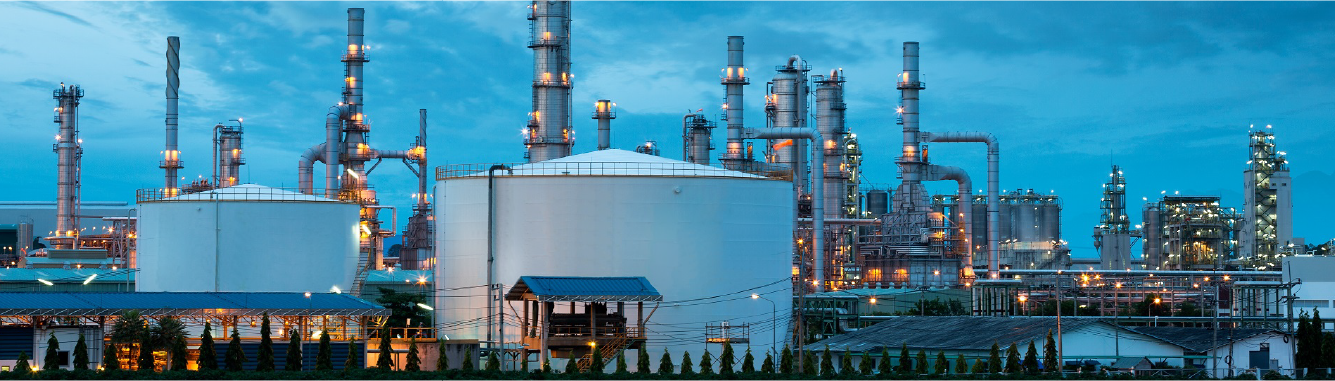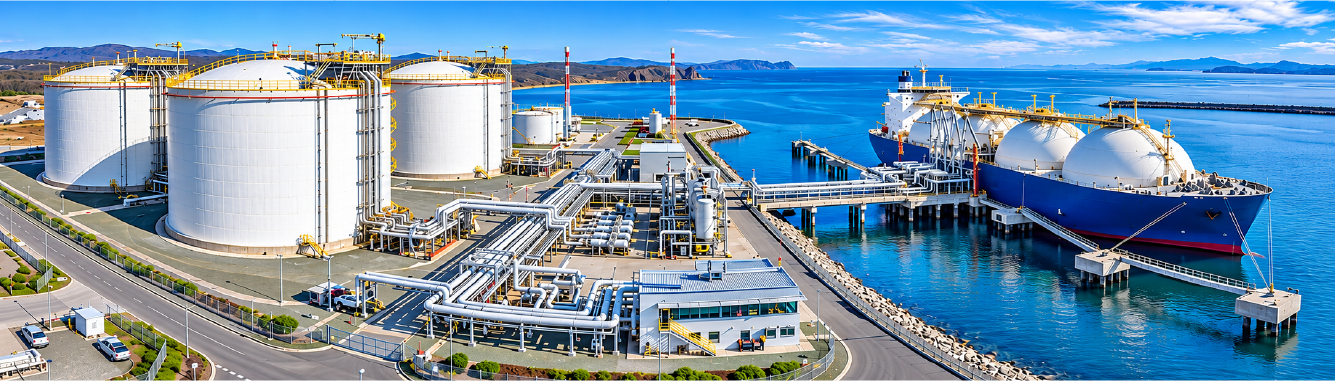
India already has a substantially larger LNG infrastructure base than a decade ago. Government data shows that the country’s LNG terminal capacity increased from 22 MMTPA across four terminals in 2014 to approximately 52.7 MMTPA across eight terminals in 2025, while the operational natural gas pipeline network expanded to more than 25,000 km.
The next stage is therefore less about LNG arriving at the coast and more about moving regasified LNG efficiently toward emerging demand centers.
With demand expected to increase across fertilizer, refining, city gas distribution, manufacturing, transport and potentially power generation, pipeline connectivity, terminal utilization, regional gas grids and commercial access will become increasingly important to India’s LNG strategy.
From LNG Import Capacity to Demand Connectivity
LNG infrastructure only creates value when imported gas can reach customers at competitive delivered prices.
From LNG Import Capacity to Demand Connectivity
LNG infrastructure only creates value when imported gas can reach customers at competitive delivered prices.
An LNG cargo may arrive at a coastal terminal, but its commercial value depends on what happens next:
- Regasification capacity must be available.
- Transmission pipelines must have sufficient capacity.
- Regional networks need to connect with demand centers.
- Storage and balancing capabilities must support fluctuations.
- Gas transportation costs must remain commercially viable.
- Industrial customers need reliable supply.
- LNG procurement must align with actual consumption patterns.
This makes pipeline connectivity one of the most important pieces of India’s LNG expansion strategy.
PNGRB’s recent analysis projects India’s natural gas demand could reach approximately 300 MMSCMD by 2030 and 423 MMSCMD by 2040 under its base case. It also identifies city gas distribution and refining as major demand drivers, followed by fertilizer, steel and emerging applications such as LNG trucking and bunkering.
The infrastructure challenge is therefore shifting from “Can India import enough LNG?” to “Can India distribute LNG efficiently enough to support new demand?”
Expanding the Pipeline Network Around New Demand Centers
Expanding the Pipeline Network Around New Demand Centers
India’s gas pipeline network is becoming increasingly important in determining where LNG can create new industrial value.
Historically, much of the country’s gas infrastructure was concentrated around established production areas and major western industrial clusters. Network expansion is creating opportunities to connect eastern, southern, northern and northeastern markets with imported and domestic gas supplies.
The government has identified continued expansion of gas pipelines, LNG terminals and city gas distribution networks as key infrastructure priorities.
For LNG, this creates an important multiplier effect.
A new pipeline does not simply transport more gas. It can make LNG commercially accessible to:
- Fertilizer plants.
- Refineries and petrochemical complexes.
- Steel manufacturers.
- Ceramic and glass industries.
- City gas networks.
- Commercial consumers.
- Heavy transport operators.
- Gas-based power facilities.
Emerging LNG trucking and bunkering markets.
The closer LNG infrastructure gets to these demand centers, the more opportunities there are to convert import capacity into actual gas consumption.
Industrial Demand Will Shape the Next LNG Growth Cycle
India’s industrial base is likely to remain one of the most important sources of incremental natural gas demand.
Industrial Demand Will Shape the Next LNG Growth Cycle
India’s industrial base is likely to remain one of the most important sources of incremental natural gas demand.
Fertilizer production already represents a significant share of Indian gas consumption, while refining, petrochemicals, steel and other manufacturing industries provide additional opportunities for gas substitution and expansion.
For industrial customers, however, availability alone is not enough.
Gas must compete with alternative fuels and feedstocks on delivered economics. This makes the combination of LNG procurement, pipeline transportation, terminal access and regional distribution costs critical.
Reuters reported in January 2026 that Indian LNG demand was expected to grow across fertilizer, city gas, refining, power, transport and household sectors, while affordability remained an important condition for stronger consumption.
This means infrastructure planners need to think beyond capacity additions. They need to understand where industrial demand is developing, what price customers can support, and how efficiently gas can reach those markets.
LNG Terminals Need Better Utilization, Not Just More Capacity
India’s LNG infrastructure expansion is also changing the geographical distribution of gas availability.
LNG Terminals Need Better Utilization, Not Just More Capacity
India’s LNG infrastructure expansion is also changing the geographical distribution of gas availability.
New and expanding infrastructure on the eastern and southern coasts can bring imported LNG closer to industrial clusters that historically had more limited access to gas.
This is particularly important as regional gas grids become more interconnected.
PNGRB has noted that future demand growth is expected across both western and eastern India, increasing the need for pipeline development that aligns supply sources with regional demand.
Price Competitiveness Will Determine How Fast Demand Grows
Price Competitiveness Will Determine How Fast Demand Grows
India’s LNG expansion ultimately depends on economics.
Imported LNG prices are influenced by global markets, shipping costs, procurement contracts and geopolitical conditions. At the same time, Indian industrial customers compare gas against alternative fuels and feedstocks.
This creates a delicate balance.
Infrastructure expansion can reduce physical supply constraints, but it does not automatically create demand. For new industrial consumers to switch to gas or increase consumption, the delivered price must be competitive and supply must be reliable.
This is particularly important for gas-based power, where LNG prices can significantly influence whether plants operate economically. Industry forecasts in 2026 have pointed to price-sensitive demand growth across several sectors.
Therefore, the next generation of LNG infrastructure needs to support not only availability but affordability, flexibility and reliability.
The Next Phase of India’s LNG Infrastructure
India’s LNG opportunity is moving beyond import capacity expansion.
The Next Phase of India’s LNG Infrastructure
India’s LNG opportunity is moving beyond import capacity expansion.
The next phase will be defined by how effectively the country connects imported LNG with new demand centers across manufacturing, fertilizer, refining, petrochemicals, city gas, transportation and other industrial applications.
With natural gas demand projected to increase substantially through 2030 and beyond, India will need infrastructure development that is coordinated across LNG terminals, pipelines, regional grids and end-user markets.
The strategic objective should be clear: build an LNG network where imported gas can move efficiently from coastal terminals to the industrial centers that need it most.
If India can align LNG procurement, terminal utilization, pipeline connectivity, digital infrastructure and industrial demand, LNG can become more than an imported commodity. It can become a flexible component of a much more connected national gas market.
Categories
LNG Infrastructure