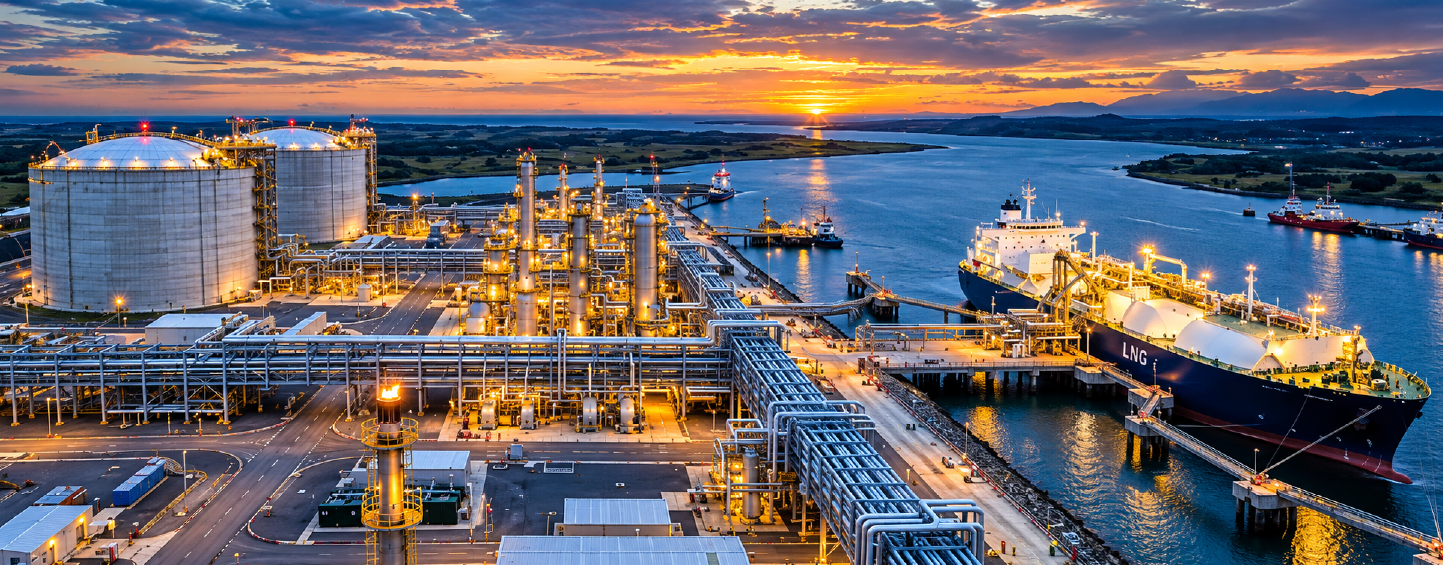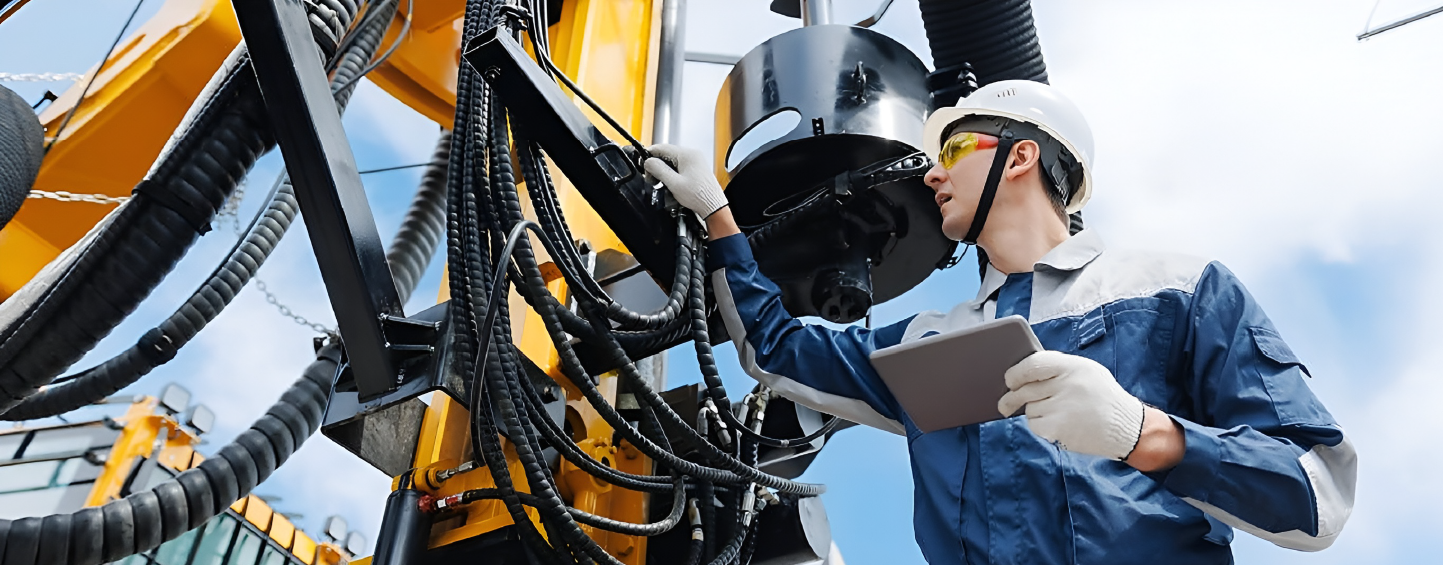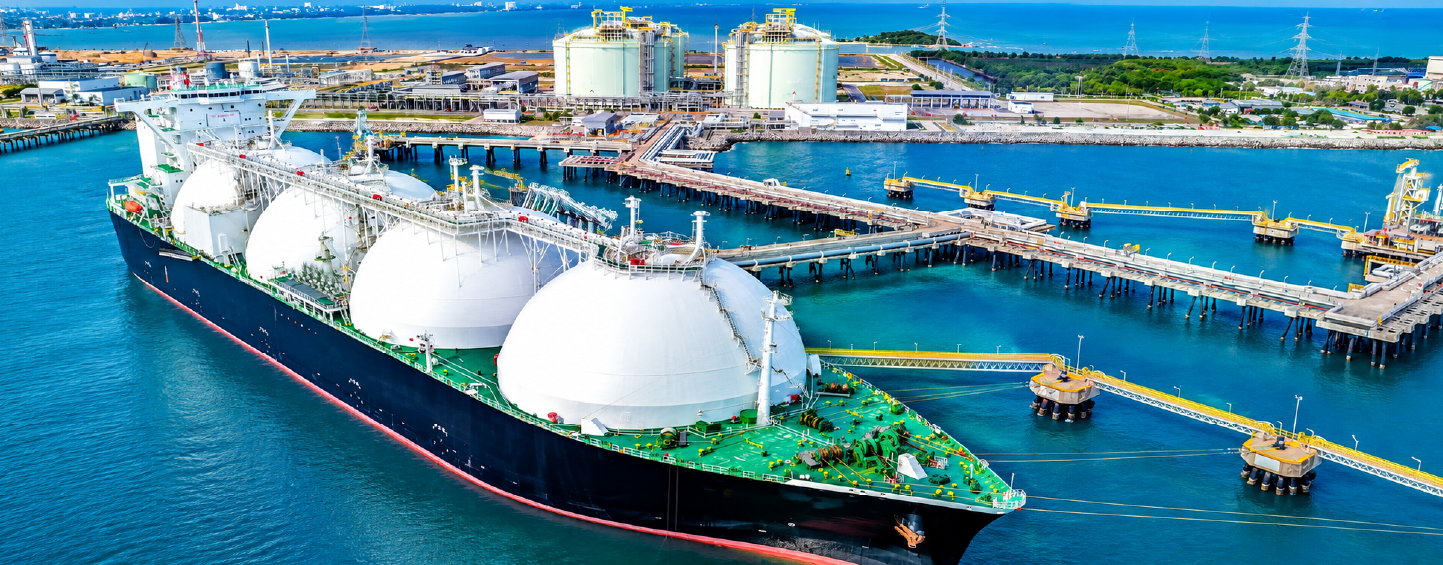
Global LNG markets are undergoing a significant infrastructure transformation as countries seek faster, more flexible ways to secure natural gas supplies and monetize offshore gas resources. While conventional onshore LNG terminals remain essential to global trade, Floating LNG terminals (FLNG) are becoming one of the fastest-growing infrastructure solutions for expanding LNG import, export, and regasification capacity. Their ability to operate offshore, reduce construction timelines, and provide scalable LNG infrastructure is reshaping how countries develop natural gas projects and respond to changing global demand.
Floating LNG infrastructure enables operators to liquefy, store, regasify, or transfer LNG directly from offshore facilities without relying entirely on large onshore terminals. From Floating Storage and Regasification Units (FSRUs) supporting energy-importing nations to Floating LNG production facilities unlocking offshore gas reserves, these technologies are creating a more agile LNG supply chain capable of serving emerging and established energy markets.
As global LNG demand continues to grow, floating LNG terminals are becoming a strategic investment supporting energy security, supply diversification, offshore gas development, and operational flexibility across international LNG markets.
Why Floating LNG Terminals Are Transforming Global LNG Infrastructure
Growing LNG demand, changing trade routes, and increasing offshore gas discoveries are creating the need for infrastructure that can be deployed faster and more flexibly than traditional onshore LNG terminals.
Floating LNG terminals help operators:
-
Expand LNG import capacity quickly.
-
Monetize offshore gas fields.
-
Reduce infrastructure development timelines.
-
Improve supply chain flexibility.
-
Support emerging LNG markets.
-
Diversify natural gas imports.
-
Strengthen energy security.
This flexibility makes floating LNG infrastructure particularly attractive for countries seeking rapid access to global LNG supplies.
Understanding the Different Types of Floating LNG Infrastructure
Floating LNG infrastructure includes multiple technologies designed to support different stages of the LNG value chain.
Floating LNG Production Facilities (FLNG)
FLNG facilities process natural gas offshore, liquefy it, store LNG onboard, and transfer cargoes directly to LNG carriers.
Floating Storage and Regasification Units (FSRUs)
FSRUs receive imported LNG cargoes, store LNG onboard, regasify it, and supply natural gas into pipeline networks.
Floating Storage Units (FSUs)
FSUs provide offshore LNG storage capacity while supporting import terminals and regional LNG distribution.
Each solution provides operational flexibility depending on regional infrastructure and market requirements.
Unlocking Offshore Gas Resources With FLNG
Floating LNG production facilities are enabling operators to commercialize offshore gas reserves that may not justify large onshore liquefaction plants.
FLNG infrastructure supports:
-
Offshore gas field development.
-
Deepwater natural gas production.
-
Remote gas monetization.
-
Reduced pipeline requirements.
-
Offshore LNG processing.
-
Export flexibility.
By bringing liquefaction closer to offshore production, FLNG reduces the need for extensive onshore infrastructure while accelerating project development.
FSRUs Are Accelerating LNG Import Infrastructure
Floating Storage and Regasification Units have become one of the fastest-growing LNG import solutions worldwide.
FSRUs offer several advantages:
-
Faster deployment than onshore terminals.
-
Lower upfront infrastructure investment.
-
Flexible relocation between markets.
-
Rapid expansion of import capacity.
-
Support for seasonal LNG demand.
-
Integration with pipeline infrastructure.
Many emerging LNG markets are adopting FSRUs as an entry point into global LNG trade while developing long-term gas infrastructure.
Supporting Global LNG Supply Chain Flexibility
Floating LNG terminals improve the flexibility of international LNG logistics by allowing infrastructure to adapt to changing supply and demand conditions.
They support:
-
New import markets.
-
Temporary LNG capacity expansion.
-
Emergency energy supply.
-
Regional LNG distribution.
-
Cargo optimization.
-
Offshore export operations.
This operational flexibility is becoming increasingly valuable as LNG trade routes evolve across global markets.
Digital Technologies Are Modernizing Floating LNG Operations
Floating LNG facilities rely on advanced digital technologies to maintain safe and efficient offshore operations.
Key technologies include:
-
Industrial Internet of Things (IIoT).
-
Digital twins.
-
Predictive maintenance.
-
AI-powered operational analytics.
-
Remote monitoring systems.
-
Asset Performance Management.
-
Operational dashboards.
-
Cloud-connected operations centers.
Digital infrastructure enables operators to continuously monitor critical offshore LNG assets from centralized operations centers.
AI and Predictive Analytics Improve FLNG Performance
Artificial Intelligence is helping floating LNG operators optimize production and terminal performance.
AI applications include:
-
Equipment health monitoring.
-
LNG production optimization.
-
Predictive maintenance scheduling.
-
Cargo planning.
-
Boil-off gas optimization.
-
Energy efficiency monitoring.
-
Operational anomaly detection.
-
Weather impact forecasting.
These capabilities improve operational reliability while reducing unplanned downtime across floating LNG facilities.
Cryogenic Storage and Boil-Off Gas Management at Sea
Floating LNG terminals require highly reliable cryogenic storage systems capable of operating safely in offshore marine environments.
Digital monitoring systems continuously monitor:
-
LNG storage temperatures.
-
Tank pressure.
-
Boil-off gas generation.
-
Cryogenic equipment condition.
-
Structural integrity.
-
Loading and unloading operations.
Optimizing cryogenic storage performance is essential for maintaining LNG quality and operational safety during offshore operations.
Offshore Asset Integrity for Floating LNG Infrastructure
Floating LNG terminals operate in harsh offshore environments exposed to waves, wind, corrosion, and continuous marine loading.
Asset integrity programs include:
-
Hull integrity monitoring.
-
Mooring system inspection.
-
Cryogenic equipment monitoring.
-
Pipeline integrity monitoring.
-
Corrosion management.
-
Structural health monitoring.
-
Risk-based inspection programs.
Continuous integrity monitoring helps extend asset life while improving operational reliability.
LNG Logistics Become More Connected
Floating LNG terminals are increasingly integrated into digital LNG logistics networks.
Connected operations improve:
-
Vessel scheduling.
-
Cargo transfers.
-
Terminal inventory visibility.
-
Offshore loading coordination.
-
Supply chain forecasting.
-
Fleet optimization.
-
Real-time logistics monitoring.
This improves coordination between offshore facilities, LNG carriers, import terminals, and downstream consumers.
Cybersecurity for Connected Floating LNG Operations
As floating LNG infrastructure becomes more digital, Operational Technology cybersecurity becomes increasingly important.
Key cybersecurity priorities include:
-
Secure offshore OT networks.
-
Network segmentation.
-
Identity and access management.
-
Secure remote operations.
-
Threat monitoring.
-
Data encryption.
-
Cyber resilience for offshore infrastructure.
Strong cybersecurity helps protect critical LNG infrastructure while supporting connected offshore operations.
Challenges in Expanding Floating LNG Infrastructure
Despite significant advantages, floating LNG infrastructure presents several technical and operational challenges.
Offshore Environmental Conditions
Marine environments require highly resilient engineering and monitoring systems.
Asset Integrity Management
Long-term offshore operation requires continuous inspection and predictive maintenance.
Integration With Pipeline Infrastructure
Floating terminals must connect efficiently with onshore gas transmission networks.
Operational Complexity
Offshore liquefaction and regasification require advanced automation and safety systems.
Digital Infrastructure
Operators need integrated digital platforms connecting offshore assets with onshore operations centers.
Addressing these challenges is essential for maximizing the operational value of floating LNG terminals.
The Future of Floating LNG in Global Energy Markets
Floating LNG infrastructure is expected to play a larger role in expanding global LNG supply chains as countries diversify energy imports and offshore gas production increases. Future developments will likely include larger FLNG facilities, next-generation FSRUs, AI-powered offshore operations, autonomous asset monitoring, digital twins, intelligent LNG logistics platforms, and integrated offshore energy hubs.
As LNG markets continue expanding, floating infrastructure will provide operators with greater flexibility to respond to changing demand while reducing development timelines and infrastructure costs.
Building Flexible LNG Infrastructure for a Changing Energy Market
Floating LNG terminals are redefining how global LNG infrastructure is developed, deployed, and operated. By combining offshore liquefaction, floating regasification, cryogenic storage, digital monitoring, predictive maintenance, and intelligent logistics, operators can build flexible infrastructure that supports both established and emerging LNG markets.
For LNG producers, importers, infrastructure developers, EPC companies, and technology providers, floating LNG terminals offer scalable solutions for strengthening energy security, improving supply chain resilience, and unlocking offshore gas resources.
As global LNG trade continues to evolve, floating LNG infrastructure will remain one of the industry's most important innovations supporting the future of natural gas markets.
Explore the Future of LNG Infrastructure
The LNG Americas Conference by PTN Events brings together LNG producers, terminal operators, offshore developers, shipping companies, EPC contractors, technology providers, and industry leaders to discuss the innovations shaping LNG infrastructure and global gas markets.
Key discussion areas include floating LNG terminals, FLNG facilities, FSRUs, LNG logistics, cryogenic storage, offshore gas development, LNG digitalization, predictive maintenance, and operational excellence across global LNG infrastructure.
Register for the conference:
https://ptnevents.com/conferences/lng-americas/register