India's natural gas sector is entering one of its most significant growth phases as the country accelerates investments in LNG import terminals, regasification facilities, gas pipeline networks, and city gas distribution infrastructure. With industries seeking cleaner fuel alternatives and urban gas connectivity expanding across hundreds of cities, India LNG import infrastructure has become a strategic pillar supporting the country's long-term energy security and industrial development.
As one of the world's fastest-growing energy markets, India continues to increase LNG imports to meet rising demand from manufacturing, fertilizers, petrochemicals, power generation, steel, transportation, and residential consumers. This growing demand has driven major investments in coastal LNG terminals, floating storage and regasification units (FSRUs), pipeline connectivity, storage infrastructure, and digital terminal operations that strengthen the country's natural gas supply chain.
Beyond increasing import capacity, India's LNG infrastructure strategy focuses on building an integrated ecosystem that connects global LNG supplies with industrial clusters, city gas distribution networks, and future gas-based economic growth.
Why India's LNG Import Infrastructure Is Becoming a National Priority
India's industrial growth and urbanization are significantly increasing demand for cleaner and more reliable energy sources. Natural gas is playing a larger role in supporting industries that require continuous fuel supply while helping diversify India's energy mix.
Expanding LNG import infrastructure helps India:
-
Strengthen long-term energy security.
-
Diversify global LNG supply sources.
-
Support industrial fuel demand.
-
Expand city gas distribution networks.
-
Increase natural gas availability across states.
-
Improve supply chain resilience.
-
Enable cleaner industrial fuel transitions.
As domestic natural gas production grows alongside imports, LNG infrastructure remains essential for balancing supply and demand.
LNG Import Terminals Are Expanding Across India's Coastline
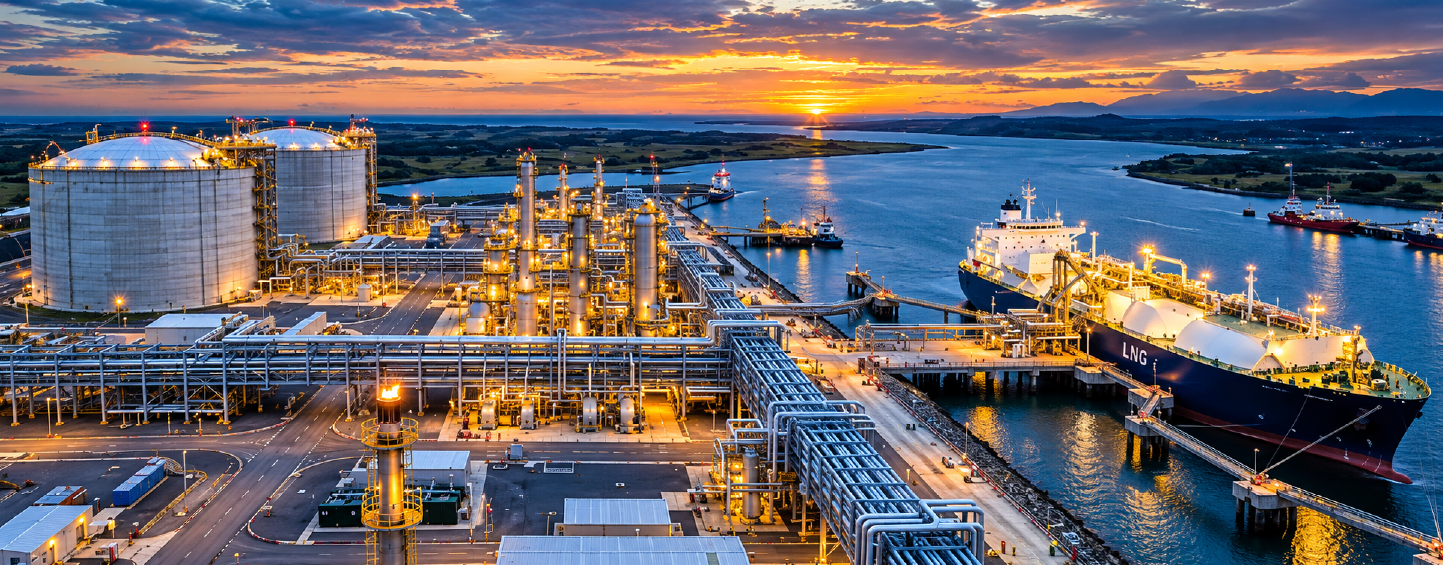
LNG import terminals are the entry point for liquefied natural gas arriving from international markets. Located along India's eastern and western coasts, these terminals receive LNG cargoes, store liquefied gas, and convert it into natural gas through regasification before supplying pipeline networks.
Modern LNG import terminals include:
-
LNG unloading facilities.
-
Cryogenic storage tanks.
-
Regasification units.
-
LNG transfer pipelines.
-
Boil-off gas management systems.
-
Loading and distribution infrastructure.
-
Terminal automation systems.
Expanding terminal capacity is improving India's ability to receive LNG from multiple global suppliers while increasing operational flexibility.
Regasification Infrastructure Connects LNG to Domestic Demand
Regasification terminals play a critical role in converting imported LNG into natural gas for industrial and commercial use.
These facilities support:
-
Industrial manufacturing.
-
Power generation plants.
-
Fertilizer production.
-
Petrochemical complexes.
-
Refineries.
-
City gas distribution companies.
-
Commercial consumers.
Increasing regasification capacity allows LNG imports to move efficiently into India's growing natural gas transmission network.
City Gas Distribution Is Driving Natural Gas Consumption
The rapid expansion of City Gas Distribution (CGD) networks is creating one of the largest sources of future natural gas demand in India.
CGD infrastructure supplies gas for:
-
Residential households.
-
Commercial buildings.
-
Industrial customers.
-
CNG transportation.
-
Small manufacturing facilities.
-
Urban infrastructure.
As more cities receive pipeline gas connectivity, LNG imports become increasingly important for maintaining consistent gas availability across expanding distribution networks.
Pipeline Infrastructure Strengthens LNG Connectivity
LNG import terminals depend on extensive pipeline infrastructure to transport regasified natural gas across industrial corridors and urban markets.
India's gas transmission network connects:
-
LNG import terminals.
-
Regasification facilities.
-
Industrial clusters.
-
Refineries.
-
Fertilizer plants.
-
Petrochemical complexes.
-
City gas distribution systems.
-
Storage facilities.
Expanding pipeline connectivity helps improve natural gas accessibility across regions while supporting future industrial growth.
LNG Infrastructure Supporting Industrial Manufacturing Growth
Natural gas is becoming an increasingly important industrial fuel for sectors seeking cleaner and more efficient energy sources.
Industries benefiting from LNG infrastructure include:
-
Fertilizer manufacturing.
-
Petrochemicals.
-
Steel production.
-
Glass manufacturing.
-
Ceramics.
-
Food processing.
-
Textiles.
-
Industrial boilers.
Reliable LNG infrastructure helps industries improve fuel availability while supporting operational continuity and production efficiency.
Digital Technologies Are Modernizing LNG Import Infrastructure
Digital transformation is reshaping LNG terminals through intelligent monitoring, automation, and operational analytics.
Key digital technologies include:
-
Industrial Internet of Things (IIoT).
-
SCADA systems.
-
Digital twins.
-
Predictive maintenance.
-
AI-powered terminal analytics.
-
Real-time storage monitoring.
-
Asset Performance Management.
-
Remote operations centers.
These technologies improve terminal reliability while providing operators with continuous visibility across LNG infrastructure.
AI and Predictive Analytics Improve LNG Terminal Operations
Artificial Intelligence is helping LNG operators optimize terminal performance and supply chain operations.
AI applications include:
-
LNG cargo scheduling.
-
Storage inventory forecasting.
-
Equipment health monitoring.
-
Predictive maintenance.
-
Boil-off gas optimization.
-
Energy consumption analysis.
-
Operational anomaly detection.
-
Capacity planning.
Predictive analytics enables operators to improve infrastructure utilization while reducing operational disruptions.
Cryogenic Storage Infrastructure Enhances LNG Reliability
Cryogenic storage tanks remain one of the most important components of LNG import infrastructure.
Modern storage systems support:
-
Long-term LNG storage.
-
Temperature monitoring.
-
Pressure management.
-
Boil-off gas recovery.
-
Structural integrity monitoring.
-
Inventory optimization.
-
Safety management.
Digital cryogenic monitoring technologies help operators improve storage performance while maintaining safe operating conditions.
Building Supply Chain Resilience Through LNG Infrastructure
India's LNG infrastructure strategy focuses on strengthening the entire LNG supply chain rather than individual facilities.
Supply chain resilience includes:
-
Multiple import terminals.
-
Diversified LNG sourcing.
-
Expanded storage capacity.
-
Pipeline connectivity.
-
Regional gas distribution.
-
Terminal automation.
-
Digital logistics visibility.
A resilient LNG network helps India respond more effectively to seasonal demand changes and global supply disruptions.
Supporting India's Long-Term Natural Gas Economy
LNG infrastructure plays a major role in India's long-term vision of increasing natural gas consumption across industrial, commercial, and residential sectors.
Future growth areas include:
-
Industrial gas demand expansion.
-
LNG-powered transportation.
-
Additional city gas distribution coverage.
-
Pipeline network expansion.
-
LNG bunkering infrastructure.
-
Industrial energy transition projects.
-
Gas-based manufacturing corridors.
These developments strengthen natural gas as an important component of India's evolving energy landscape.
Challenges in Expanding India's LNG Import Infrastructure
Despite rapid infrastructure growth, several challenges remain.
Expanding Pipeline Connectivity
Some industrial regions still require stronger gas transmission connectivity.
Balancing Supply and Demand
Growing LNG imports must align with expanding industrial and city gas demand.
Infrastructure Investment
Large LNG terminals, storage tanks, and pipelines require significant long-term investment.
Operational Reliability
Terminals require continuous monitoring, maintenance, and automation to ensure safe operations.
Digital Integration
Operators increasingly need integrated digital platforms connecting terminals, pipelines, storage facilities, and distribution networks.
Addressing these challenges will help maximize the value of India's LNG infrastructure investments.
The Future of India's LNG Import Infrastructure
India's LNG infrastructure is expected to become more connected, digital, and operationally intelligent over the coming decade. Future investments will likely include additional LNG import terminals, expanded regasification capacity, AI-enabled terminal operations, digital supply chain platforms, cryogenic monitoring systems, pipeline expansion, and integrated LNG logistics networks.
As industrial demand continues growing alongside city gas distribution, LNG infrastructure will remain essential for ensuring reliable natural gas availability across India's energy ecosystem.
Building India's Next Generation Natural Gas Infrastructure
India's LNG import infrastructure is becoming the foundation of the country's growing natural gas economy. By expanding import terminals, strengthening regasification capacity, connecting industrial corridors through pipelines, and modernizing terminal operations with digital technologies, India is improving energy security while supporting long-term industrial development.
For industries, infrastructure developers, policymakers, and technology providers, LNG infrastructure represents one of the country's most important investments in building a resilient, connected, and future-ready energy system.
As LNG imports continue supporting manufacturing, transportation, city gas distribution, and industrial growth, India's LNG infrastructure will play a defining role in the future of the nation's oil and gas sector.
Explore the Future of Oil & Gas in India
The Future of Oil & Gas in India Conference by PTN Events brings together LNG operators, refinery leaders, gas infrastructure companies, pipeline operators, policymakers, EPC contractors, technology providers, and industry experts to discuss the future of India's natural gas and LNG infrastructure.
Key discussion areas include LNG import terminals, regasification infrastructure, city gas distribution, gas pipeline expansion, LNG storage, digital terminal operations, industrial gas demand, and India's growing natural gas economy.
Register for the conference:
https://ptnevents.com/conferences/future-oil/register